Yuma Yard Waste Is Different — Here’s Why
Most national dumpster guides assume yard waste means grass clippings, branches, and hedge trimmings. That applies in most of the country. In Yuma, the picture is a lot more varied — and some of it requires specific handling that a generic guide will never mention.
Palm Fronds — Volume, Not Weight
Palm trees are the defining feature of Yuma’s residential landscape. They produce fronds continuously, and the dead frond skirts that accumulate around palm trunks are a fire hazard and a regular maintenance issue. After a Yuma monsoon, downed fronds pile up fast.
Palm fronds weigh 5 to 10 pounds each but run 10 to 14 feet long. They do not compact. A full palm frond cleanup — trimming skirts on three or four palms plus clearing storm debris — fills a container by volume long before you come close to the weight limit. A 20-yard container handles most residential palm frond cleanups in Yuma.
Fold or break fronds where you can to get more in the container. The key: do not use the lowboy for palm fronds. The lowboy is priced and designed for heavy material — using it for lightweight organic debris wastes a load.
Mesquite, Palo Verde, and Desert Trees
Native Yuma trees produce difficult debris. Mesquite branches are dense, thorny, and hardwood — they do not break down easily and they fight back when you try to compact them. Palo verde is lighter and easier to manage. Ironwood is the densest native desert tree and the heaviest by volume of any common tree in Yuma.
All of these go in a standard roll-off container. For large tree removal — a full mesquite or mature palm coming down — step up to a 30-yard container to handle the volume comfortably.
Cactus Disposal
Saguaro sections, prickly pear pads, and cholla pieces can all go in a standard roll-off container. The important thing: bag or wrap cactus pieces before loading. Loose cactus in a container is a hazard to anyone touching the debris and pieces can work through gaps in the container. Heavy-duty contractor bags or cardboard wrapping work well for prickly pear pads and cholla. Larger saguaro sections can go in loose but position them carefully so they do not fall out during loading.
Cactus cannot go in composting or city green waste bins because of the thorns and the moisture content of succulent plant tissue.
Oleander — The Toxic Hedge
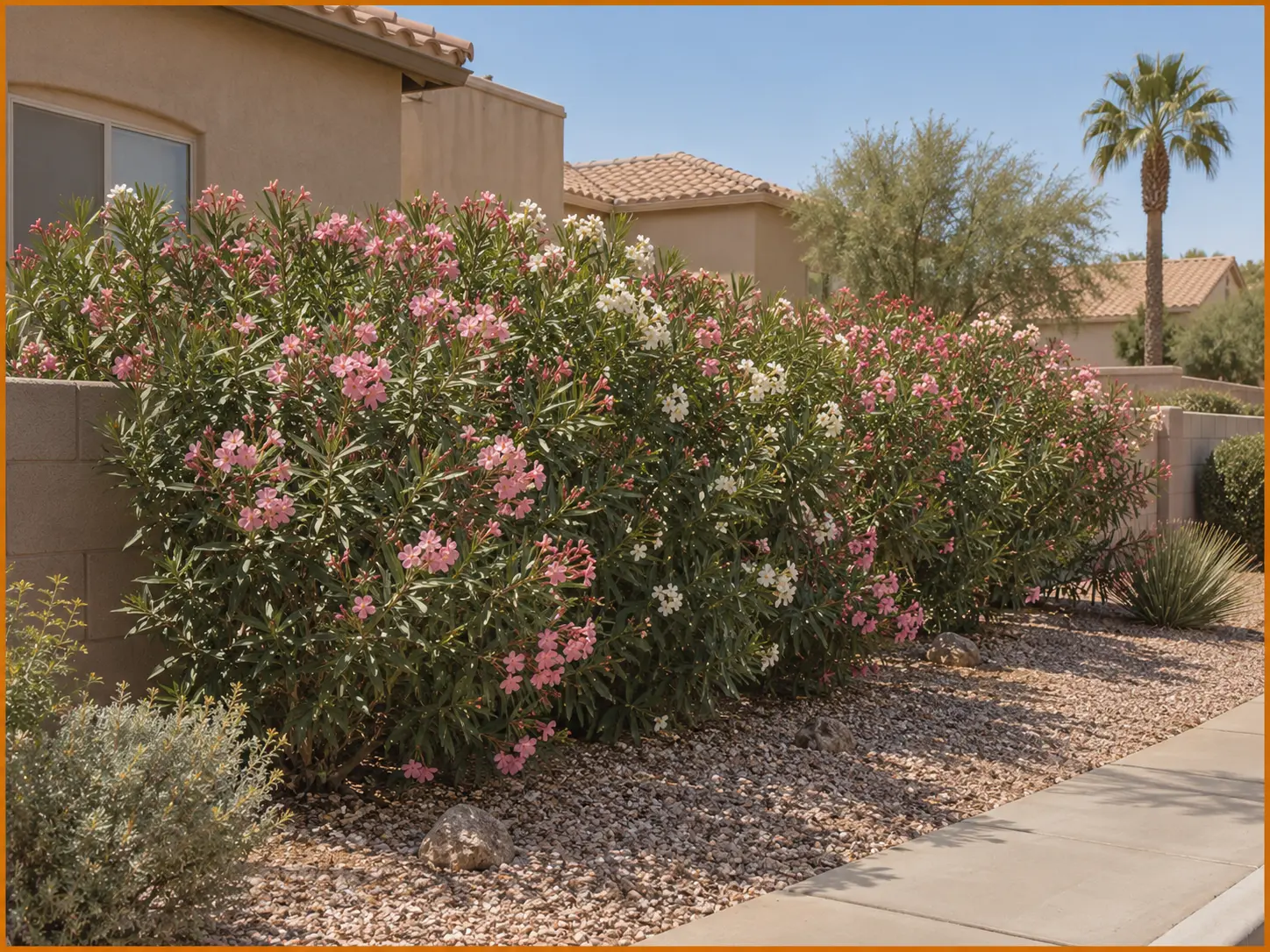
Oleander is one of the most common hedge and border plants in Yuma County. Virtually every established neighborhood has oleander lining property boundaries, street medians, and commercial borders. It grows fast, provides privacy, and handles Yuma’s heat well. It is also extremely toxic — all parts of the plant, including roots, stems, leaves, and flowers, are poisonous to humans, animals, and wildlife through contact and ingestion.
Oleander clippings must go in a roll-off container — not the city green waste bin. City green waste programs and commercial composting facilities do not accept oleander because it contaminates the compost stream and remains hazardous even after decomposition. Load it into the container and we haul it to the South Yuma County transfer station for proper disposal.
This is one of the most commonly mishandled yard waste items in Yuma. If you are trimming or removing oleander, use the container — not the green bin.
The Heavy Landscaping Debris Problem — Separate Container Required
This is where Yuma yard cleanouts get complicated. The inorganic ground cover materials that define desert landscaping — DG, river rock, flagstone, pavers — are heavy enough that they overwhelm a standard roll-off before the container looks more than one-third full.
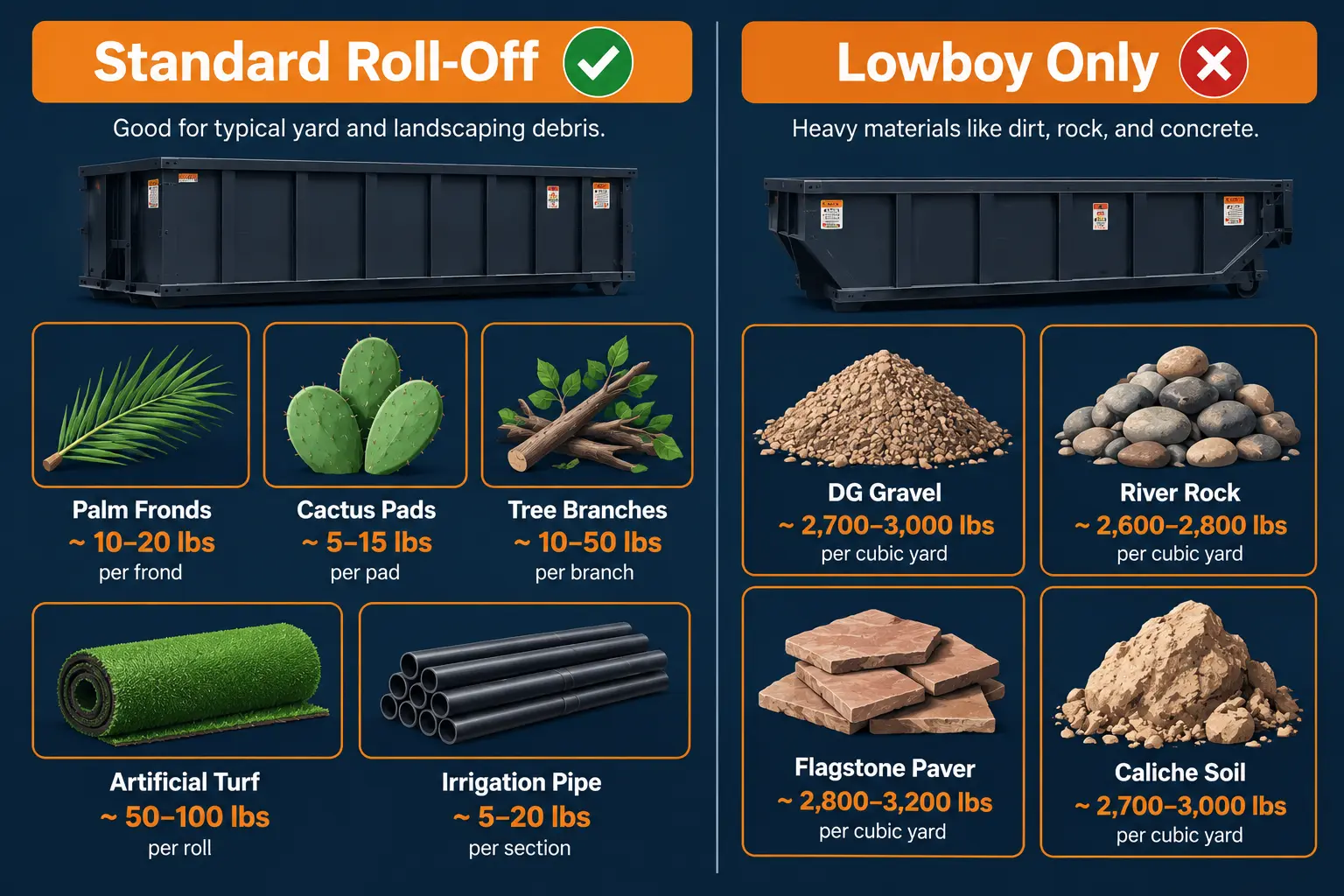
| Material | Weight per Cu Ft | Standard Roll-Off? |
|---|---|---|
| Palm fronds | ~1–2 lbs | ✅ Yes — 20-yd |
| Tree branches / brush | ~10–20 lbs | ✅ Yes |
| Cactus / organic debris | ~15–25 lbs | ✅ Yes |
| Artificial turf | ~20–30 lbs | ✅ Yes |
| Irrigation PVC / drip tubing | Light | ✅ Yes |
| Decomposed granite (DG) | ~90–100 lbs | ❌ Lowboy only |
| River rock / stone | ~100–110 lbs | ❌ Lowboy only |
| Caliche hardpan | ~100 lbs | ❌ Lowboy only |
| Flagstone / concrete pavers | ~100–150 lbs | ❌ Lowboy only |
If your landscaping overhaul involves both organic debris and DG or rock removal, you need two separate containers — a standard roll-off for the organic material and a lowboy for the heavy inorganic material. Call us when you book and describe what the project involves. We help you plan the right combination from the start.
Artificial Turf Removal — A Growing Yuma Market
Many Yuma homeowners are transitioning from DG and rock ground cover to artificial turf — or removing old artificial turf that has aged out. Artificial turf itself goes in a standard roll-off container. It is bulky but not excessively heavy — typical artificial turf runs 20 to 30 pounds per square foot including the backing.
The issue is usually what sits under the turf. DG infill, sand, or small stone used as a base material is heavy and needs to go in the lowboy. If your artificial turf project involves removing both the turf surface and its base material, call us to discuss the container combination.
Timing a Yuma Yard Cleanout
Yuma’s climate creates two distinct peak windows for yard and landscaping work:
Spring (March through May): The most popular time for major landscaping overhauls in Yuma. Temperatures are manageable, snowbird departure creates motivation for property cleanup, and HOA compliance deadlines often fall in spring. This is the busiest booking window for yard waste containers.
Post-monsoon (September through October): After the monsoon season (June 15 through September 30), yards accumulate storm debris — downed palm fronds, broken branches, wind-blown material from haboobs. Post-storm cleanup drives significant container demand in September and October.
What to avoid: Booking outdoor landscaping work for midday in June, July, or August. Yuma’s summer heat regularly exceeds 106 degrees Fahrenheit. All meaningful outdoor work in peak summer happens before 8am or after 5pm. If your yard project falls in summer months, plan loading for early morning.
Dumpster Sizing for Yuma Yard Projects
| Project Type | Container | Price Range |
|---|---|---|
| Palm frond trim/cleanup | 20-yard | $350–$450 |
| Tree removal (1–2 trees) | 20-yard | $350–$450 |
| Full organic yard overhaul | 20–30 yard | $350–$550 |
| Large property — organic only | 30-yard | $425–$550 |
| DG or river rock removal | Lowboy | Call for quote |
| Mixed organic + DG project | Standard + Lowboy | Call for combo |
| Artificial turf removal (turf only) | 20-yard | $350–$450 |
Flat-rate pricing — delivery, 7-day rental, pickup, and disposal up to the included weight limit. Extra days at $25 to $40 per day. Overage charges at $45 to $85 per ton for loads that exceed the weight limit — most organic yard debris stays comfortably within limits.
When to Use the City of Yuma Green Waste Program Instead
The City of Yuma provides green waste collection for eligible organic yard material through its residential waste services. A dumpster may not be necessary for small, routine yard trimmings that fit within normal collection limits.
A container is the right choice when:
- Volume exceeds what green waste collection handles in a single pickup
- The debris includes cactus (not accepted in green waste)
- The debris includes oleander (not accepted in green waste — toxic)
- The project includes heavy inorganic material (DG, rock — green waste never accepts these)
- The timeline requires getting everything cleared in one shot rather than staged collection
For most landscaping overhauls in Yuma, a container is the practical choice. Call us if you are not sure — we will tell you honestly whether a container makes sense for your volume.
Book Your Yard Waste Container
Call (928) 268-6454 Monday through Saturday, 7AM to 6PM. Tell us what you are clearing, approximately how much volume you have, and whether your project includes any heavy inorganic material like DG or river rock. We confirm the right container in about two minutes.
¿Necesita un contenedor para limpiar su jardín en Yuma? Llámenos — también hablamos español.
✅ Licensed & Insured | Same-Day Delivery | Flat-Rate Pricing | No Hidden Fees
Serving: Yuma · Fortuna Foothills · Somerton · San Luis · Wellton · Winterhaven
Address: 3100 24th St, Yuma, AZ 85365
Yard Waste and Landscaping Dumpster FAQ
Yes — standard roll-off, any size. Palm fronds are light (5–10 lbs each) but very long (10–14 ft). A 20-yard handles most residential palm cleanups. Break or fold fronds to fit more. Do not use the lowboy for palm fronds.
No. DG weighs 90 to 100 lbs per cubic foot and hits the weight limit on a standard container before it looks a third full. DG goes in the lowboy only. Call us to discuss load count for your project.
Yes. Bag or wrap cactus pieces before loading — loose thorny material is a handling hazard. Cactus goes in a standard roll-off, not the lowboy.
No. Oleander is toxic to humans, animals, and wildlife — city green waste and composting facilities do not accept it. Oleander must go in a roll-off container for disposal at the transfer station.
For organic material only (fronds, trees, shrubs, cactus, brush): 20-yard for most Yuma residential yards, 30-yard for large properties. If DG, river rock, or caliche is also being removed, call us — you will need a separate lowboy for the heavy material.
Yard waste = organic plant material (fronds, branches, brush, cactus, oleander) — standard roll-off. Heavy landscaping debris = inorganic ground cover (DG, river rock, caliche, pavers) — lowboy only. Mixing them in the same container leads to overage fees.
Spring (March through May) or post-monsoon (September through October). Avoid midday outdoor work in June through August — Yuma summer heat regularly exceeds 106 degrees. If working in summer, load early morning before 8am.