Yuma Monsoon Season — What You Are Actually Dealing With
Yuma is one of the driest cities in the United States — about 3.3 inches of rain per year on average. Most people who have never lived here assume that means flood damage is not a real concern. They are wrong.
The North American Monsoon System shifts Yuma’s wind patterns every year starting around June 15, pulling moisture up from the Gulf of California and Gulf of Mexico. That moisture does not fall gently. It drops in short, intense bursts — sometimes half an inch to two inches in a matter of hours — on soil that cannot absorb it.
Why Yuma floods so easily:
Yuma’s caliche hardpan — the dense, calcium-rich soil layer that sits just below the surface across most of Yuma County — does not absorb water. When rain falls faster than it can run off, it pools. Yuma also sits in a natural low-lying basin that concentrates runoff from surrounding terrain. One significant monsoon event can flood streets, driveways, yards, and ground-floor interiors across wide areas of the city.
Monsoon season runs June 15 through September 30. The most intense storm activity typically falls in July and August. Late-season tropical moisture events can extend the impact into September — Tropical Storm Lorena in September 2025 brought unusually heavy moisture to Yuma County and caused property damage across multiple neighborhoods.
What a Yuma Monsoon Does to Your Property
Monsoon storms in Yuma create a specific pattern of damage that is different from what you see in most other parts of the country. Here is what actually happens to Yuma homes during and after a major monsoon event:
Haboobs and Dust Damage
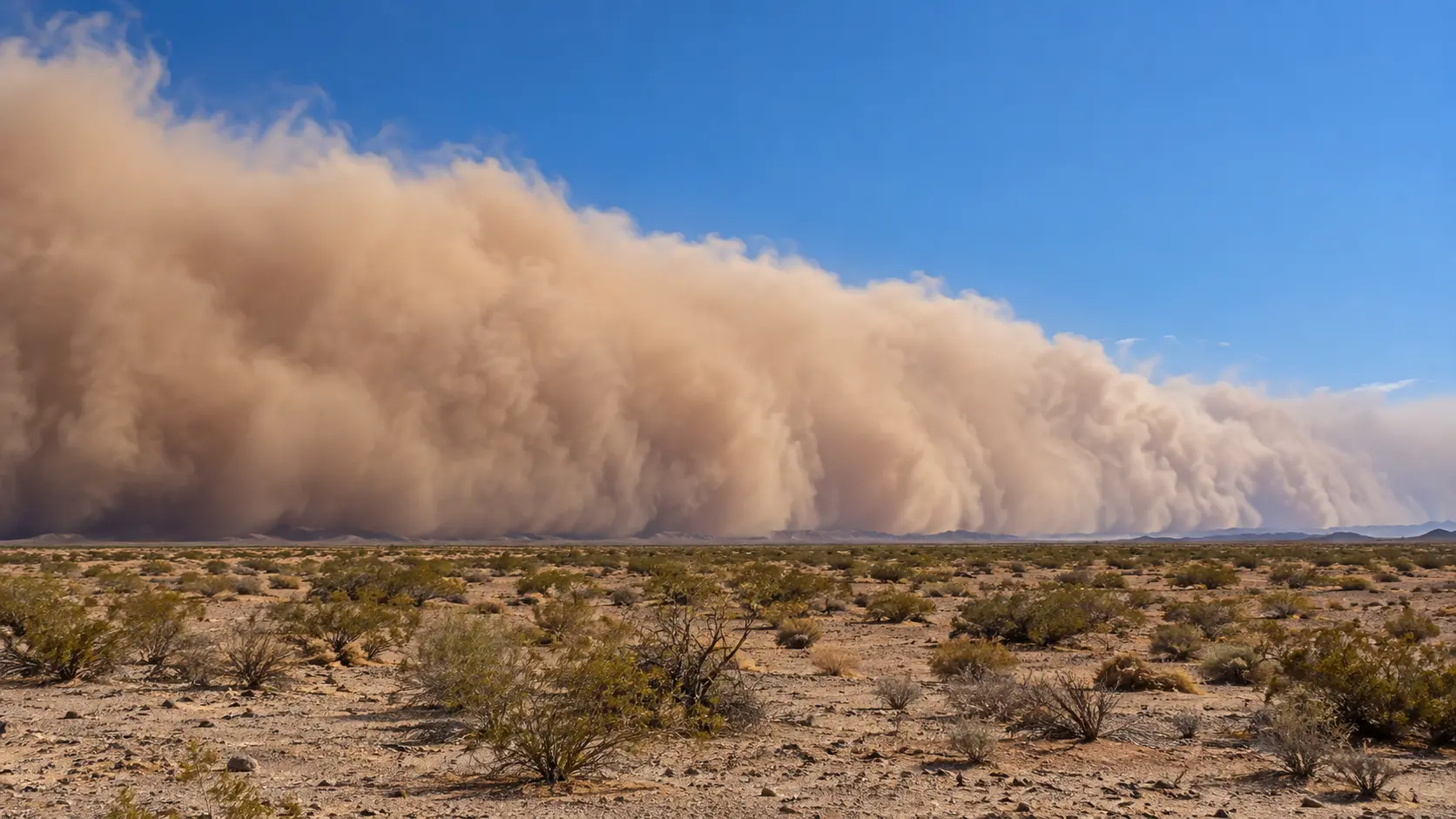
Before many Yuma thunderstorms arrives a haboob — a massive wall of dust and debris driven by outflow winds from the storm. Haboobs can reach 5,000 feet high and sweep across the entire Yuma valley in minutes. They push dust and fine debris into homes through door gaps, window seals, HVAC systems, and any opening in the building envelope. After a significant haboob, interior cleanup can involve removing ruined soft goods, dust-clogged items, and debris that entered the home.
Flat Roof Failures
Flat and low-slope roofs are extremely common in Yuma — on residential homes, commercial buildings, and carport covers. During heavy monsoon rain, standing water on a flat roof can exceed what the drainage system handles. The result is ponding water that finds its way through seams, flashing, or existing weak points. Water-damaged drywall, insulation, and ceiling material from flat roof failures are among the most common post-monsoon debris types we haul.
Palm Frond and Tree Debris
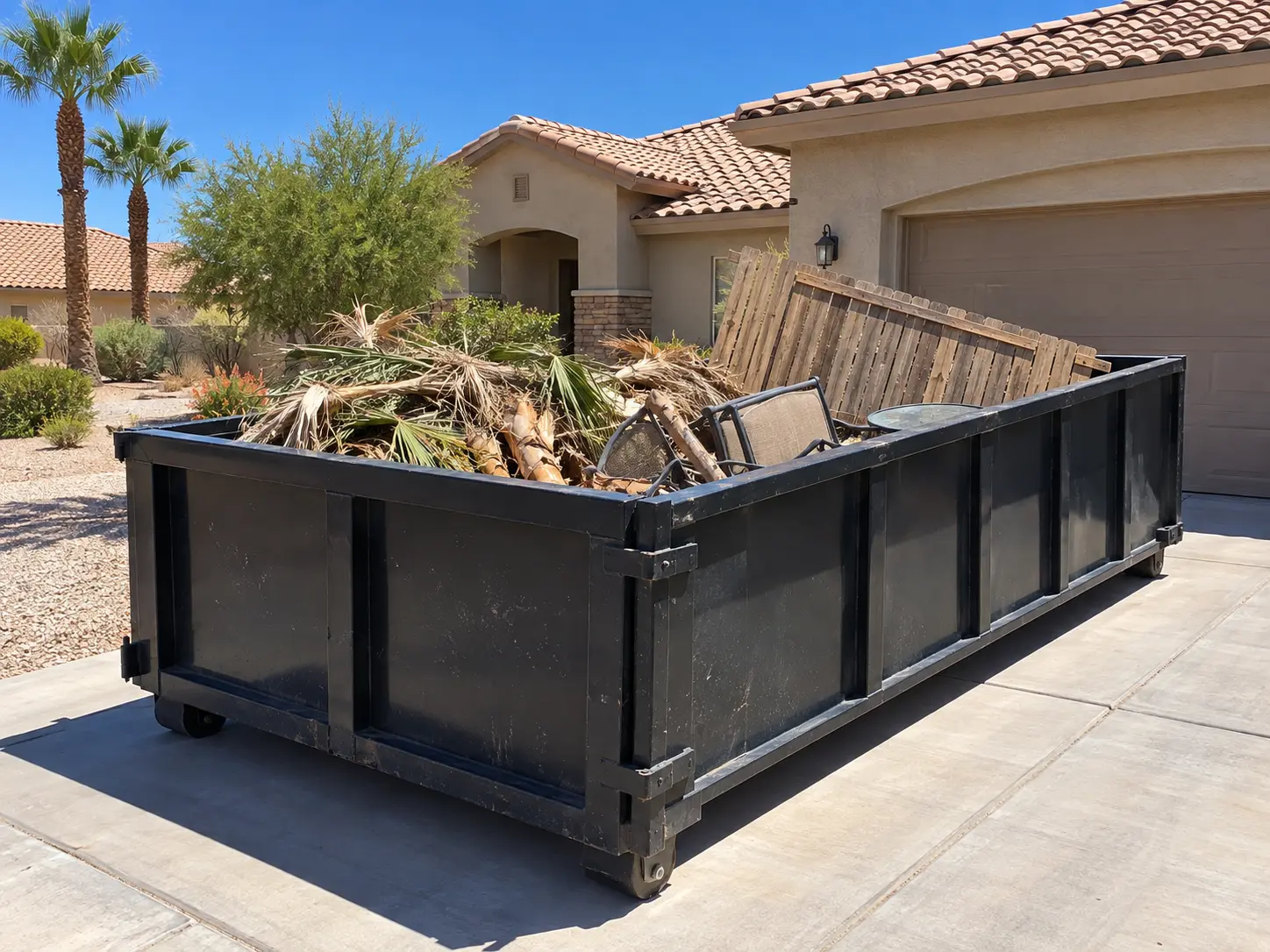
Yuma’s palm trees — a defining feature of the landscape — are not designed for sustained high winds. A major monsoon event can drop large numbers of fronds and in severe cases topple entire palms. Palm fronds are light (5 to 10 pounds each) but very long and bulky. A serious palm debris situation fills a container quickly — volume, not weight, is the concern. A 20-yard container handles most post-monsoon palm frond cleanup in Yuma.
Blown Fence Panels and Carport Damage
Yuma’s block and wood fences take a beating in haboob and thunderstorm conditions. Blown fence panels are one of the most consistent post-monsoon damage types we see across the city. Damaged carport covers — lightweight metal structures that are very common in Yuma — can come down partially or completely in strong wind events. Both fence debris and carport material go in a standard roll-off container.
Water-Damaged Household Contents
When water enters a home — through a flooded yard, a failed flat roof, or a breached door threshold — the contents that get soaked often cannot be salvaged. Waterlogged furniture, carpeting, mattresses, clothing, and stored items all go in the container. So does flood-damaged drywall and insulation once the drying and remediation process begins. This category of debris can add up quickly on weight, because wet material is significantly heavier than dry.
What Size Dumpster for Monsoon Cleanup in Yuma
A 20-yard container handles most Yuma residential monsoon cleanups. It covers palm fronds, fence panels, damaged outdoor furniture, roofing debris, and water-damaged household contents from a single event on a standard residential property.
Step up to the 30-yard when the damage covers multiple parts of the property — for example, fence down, flat roof failed, and ground-floor contents flooded in the same event.
Do not load caliche or concrete debris mixed with storm debris. If your property has hardscape or concrete that was also damaged, call us. Heavy desert materials need the lowboy container — mixing them into a standard roll-off can push you into significant overage fees because the weight limit gets hit long before the container looks full.
What Goes In After a Monsoon — And What Does Not
Goes in without issue:
- Palm fronds and tree debris (branches, limbs — cut to manageable lengths)
- Blown fence panels — wood, chain-link, metal
- Damaged carport covers and patio structures (metal and wood)
- Water-damaged furniture — sofas, beds, chairs, tables
- Wet carpeting, rugs, and flooring
- Flood-damaged drywall and insulation
- Damaged outdoor furniture, grills, equipment
- Roofing material from storm-failed flat roofs
- Clothing and soft goods ruined by water or dust
- Damaged storage tubs, boxes, and household contents
Cannot go in regardless of the situation:
- Pool chemicals — Yuma homes have a high rate of pool ownership, and monsoon events can displace pool chemical storage from garages or sheds. Pool chemicals are extremely hazardous and strictly prohibited. Take them to a Yuma County Household Hazardous Waste collection event.
- Motor oil and automotive fluids
- Paint and paint cans with wet residue
- Batteries
- Propane tanks
- Electronics
For the full prohibited items list, see our materials guide.
Emergency Same-Day Delivery After a Yuma Storm
Standard same-day delivery is available for orders placed before noon, Monday through Saturday, across most of Yuma County — Yuma city, Fortuna Foothills, Somerton, San Luis, and surrounding areas.
After major monsoon events, we extend availability as much as possible for storm cleanup situations. Call us directly at (928) 268-6454 when the storm has passed — do not wait and assume we are booked. Tell us what happened, where you are, and what you need. We will tell you exactly when we can get there.
We do not deliver during an active storm — road safety matters for our drivers and for your property. Once conditions are safe, we move fast.
Wellton and Winterhaven are next-day for standard orders. After a major regional storm event, call to discuss emergency options.
Rental Period for Storm Cleanup
The standard rental period is 7 days. For monsoon cleanup situations, 7 days is usually enough — most families want the debris cleared and the container gone as quickly as possible, not sitting in the driveway for two weeks.
If the damage involves remediation — drying out walls, waiting for an adjuster, or staging additional work — extra days are available at $25 to $40 per day. Let us know before the rental period ends and we extend automatically. Weight overages beyond the included limit run $45 to $85 per ton — most storm debris stays well within limits, but waterlogged material can be heavier than expected.
Book Your Storm Cleanup Dumpster
Call (928) 268-6454 — we answer Monday through Saturday, 7AM to 6PM. For storm emergency situations call us directly regardless of the time and we will do everything we can.
¿Tuvo daños por la lluvia monzónica en Yuma? Llámenos — también hablamos español.
✅ Licensed & Insured | Same-Day Delivery | Flat-Rate Pricing | No Hidden Fees
Serving: Yuma · Fortuna Foothills · Somerton · San Luis · Wellton · Winterhaven Address: 3100 24th St, Yuma, AZ 85365
Monsoon Cleanup Dumpster FAQ
Yes. Call (928) 268-6454 as soon as the storm passes. Standard same-day delivery covers orders placed before noon Monday through Saturday. After major events we extend availability for emergency storm cleanup — call us directly and we tell you exactly what is possible.
A 20-yard handles most residential Yuma monsoon cleanups — palm fronds, fence panels, water-damaged furniture, flat roof debris, and general storm damage all fit. For major events hitting multiple parts of the property, use the 30-yard. Fence-only or small debris situations may only need a 10-yard.
Yes — wet furniture, carpet, drywall, insulation, and household contents all go in together. Keep in mind that waterlogged material is significantly heavier than dry debris. If you are clearing a room that took flooding, call us to confirm the right container size so you do not hit the weight limit unexpectedly.
Pool chemicals (very common in Yuma — must go to an HHW collection event), motor oil, paint, batteries, propane tanks, and electronics. Monsoon events sometimes displace these from garage storage — sort them out before loading. Full prohibited list at our materials guide.
Not during an active storm — road safety is the priority. Once conditions are clear, we move quickly. Call us as soon as it is safe and we coordinate timing from there.
Yuma’s caliche hardpan soil does not absorb water well. When monsoon storms drop rain quickly — even just half an inch to an inch — the water has nowhere to go and pools on the surface. Yuma also sits in a low-lying basin that concentrates runoff. One short burst of monsoon rainfall is enough to cause significant flooding in many neighborhoods.
7 days standard. Extra days are $25 to $40 per day. Most families clear monsoon debris within the standard window — if remediation or additional repair work is ongoing, just let us know before the period ends and we extend automatically.